

How to Spot a Global Grift (Even If You’re Not a Banker)
They say they’re rescuing a country. What they’re really rescuing is the leverage.
1. What Happened in Argentina?
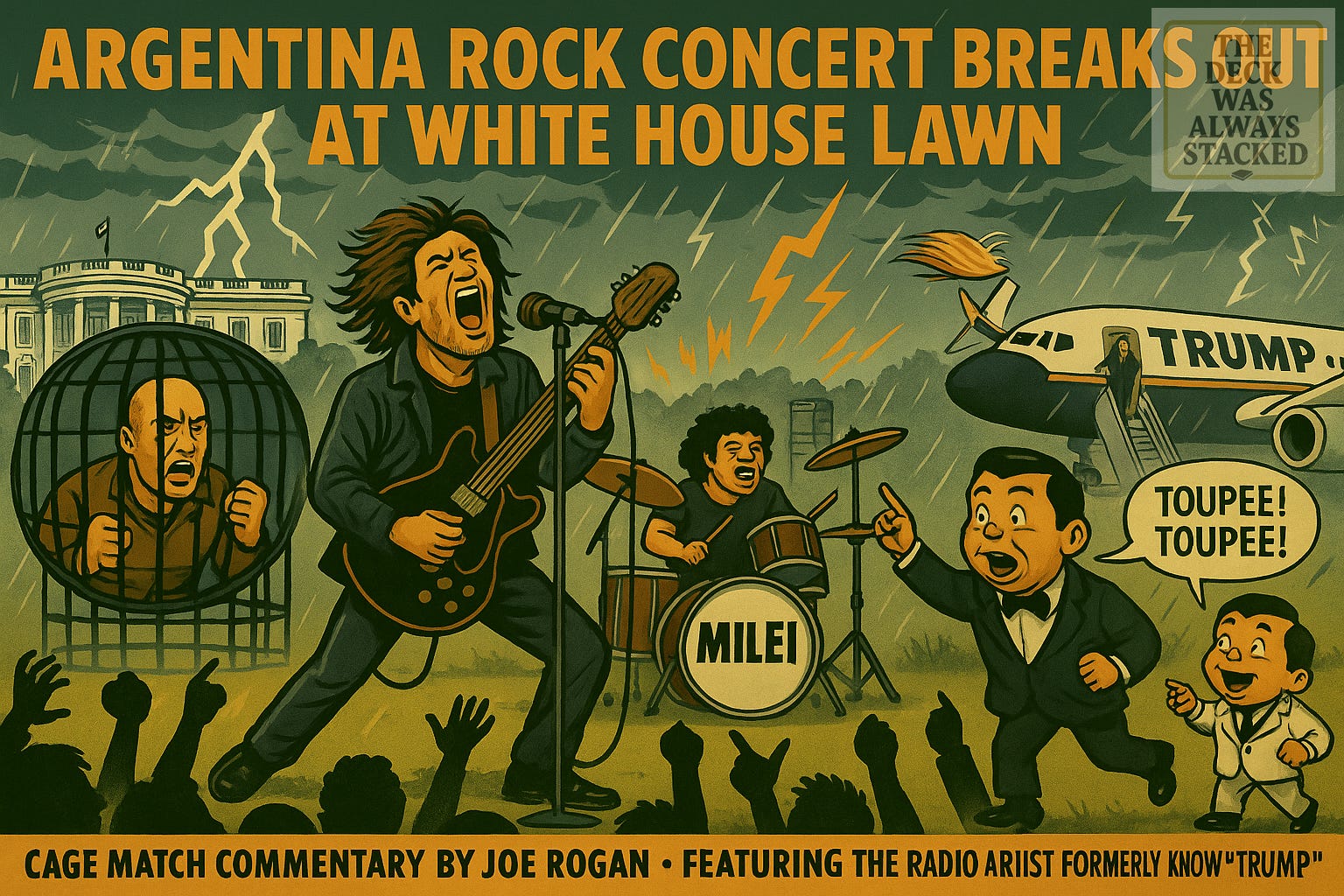
Argentina has been in deep economic pain: inflation out of control, repeated defaults, and frequent crises. Then, in October 2025, the U.S. stepped in.
On October 9, the U.S. Treasury announced a $20 billion currency‑swap framework with Argentina’s central bank — part of a move to buy Argentine pesos on the open market. Reuters+2The Washington Post+2
On October 15, Argentina’s Economy Minister said the swap could be executed before the mid‑term vote. Reuters
By October 22, the U.S. was reportedly offering a potential $40 billion total package, combining the swap with an additional $20 billion from private and sovereign investors. Reuters+1
On October 26, Treasury Secretary Scott Bessent told NBC it “is not a bailout… and it is not going to register a loss.” Reuters
2. Why It’s More Than We’re Helping a Country
If you look closer, you see five big threads that show this isn’t just charity.
Geopolitical competition. Argentina sits in a region where U.S. influence competes with China’s. The aid ties directly to U.S. alliances and strategic resources. Reuters+1
Debt & leverage. Argentina is a known defaulter. Betting on it means assuming big risk. Some banks are reportedly refusing to lend without collateral. Reuters+1
Political engineering. The aid package is conditioned on electoral outcomes. Reuters+1
Financial infrastructure & tokenization. While not always obvious, the architecture of debt, currency swap, and finance rails points to new systems of value and influence.
Domestic distraction. U.S. farmers and others domestically are being impacted: Argentina is redirecting soybean exports to China, thanks to the deal. Axios+1
3. How This Connects to Bigger Loops (Crypto, AI, Control)
Here’s why this should matter even if you’re not following hedge funds or global finance:
🪙 Tokenised Value & Invisible Power
When you swap currencies, you’re shaping who controls value. Stable‑coins, crypto platforms, or new rails could be embedded in deals like this.
🧠 AI & Data Intelligence
Who underwrites these packages? Who controls the data, the algorithms, the flows of money? In modern systems, the infrastructure is as powerful as the cash.
🎭 The Masked Heist
Sequence: crash → intervention → infrastructure → narrative control.
That’s the loop we’re in.
Crash: Argentina’s economy
Intervention: U.S. swap + aid
Infrastructure: new financial rails
Narrative control: “We’re helping our ally”
The real power shift: away from oversight, toward networked capital
4. What to Watch (Prediction + Signals)
Here are signals, not guarantees, of what might happen next:
✅ Short‑Term
Will Argentina’s mid‑term elections strengthen the government tied to the aid? If yes, the deal might be called a success.
Will banks finalize the additional $20 billion facility with private capital?
Will the peso hold or collapse despite the swap?
✅ Medium‑Term
Do asset transfers or privatizations follow the aid?
Does conversion to tokenized value or stable‑coin rails appear in Argentina’s economy or debt?
Do domestic workers or small businesses lose control or leverage as reforms deepen?
✅ Risk Scenarios
If Argentina fails despite the support, who takes the loss? U.S. taxpayers? Private investors? Argentinians?
Do other countries now see bailouts tied to political conditions or financial infrastructure access?
Does the digital/crypto‑finance layer shift from innovation to dependency?

5. Why This Matters to You
At the surface: “$40 billion for Argentina”.
Underneath: value flow, control, and who holds the rails.
Currency sovereignty. If local currency is swapped for foreign dollars or tokenized value, the locals lose power.
Value control. If flows run through private rails, transparency suffers.
Narrative framing. They say: “We saved democracy.” You should ask: Whose democracy? Whose value system? Who pays?
6. What the “Scam” Might Be
If one were designing the scenario:
Pick a weak country (Argentina).
Offer patches: swap + aid.
Tie functionality to an election or reform agenda.
Build access to assets, debt, digital rails.
Sell the public a “lift‑up” story while privatizing the rails of value behind the scenes.
The scandal: you still see volatility, profit flows to insiders, and you never get clear oversight.
7. What to Remember
The hand that controls the bailout narrative might also control the value‑rails behind it.
The hand may not be in your wallet — it may be in your algorithm.
🧩 Alt‑Text for Any Image Embed
“A stylised image of U.S. and Argentine flags merging into a dollar and peso swirl, overlaid by the text ‘$20 B swap line + $20 B facility’. In the corner, a faint outline of the U.S. Treasury building. Captioned: ‘Uncle Sam’s gamble on Argentina ties value, politics and leverage into one loop.’”
🔗 Embed‑Links (for reference)
U.S. banks seeking collateral for Argentina facility. Reuters
Argentina bailout imperils U.S. purse. Reuters
Trump conditions aid on Argentina midterms. Reuters
Warren letter raising concerns. Senate Banking Committee
🏁 Final Call
Hold this question in mind as you read headlines tomorrow:
Who built the deal? Who pays the cost? Who holds the rail?
When you unpack it, the end‑game isn’t just a country saved. It might be a system rewritten.
CreatorHuman ™ TJ Baden Pass it back, play it forward.
More on the Argentina bailout
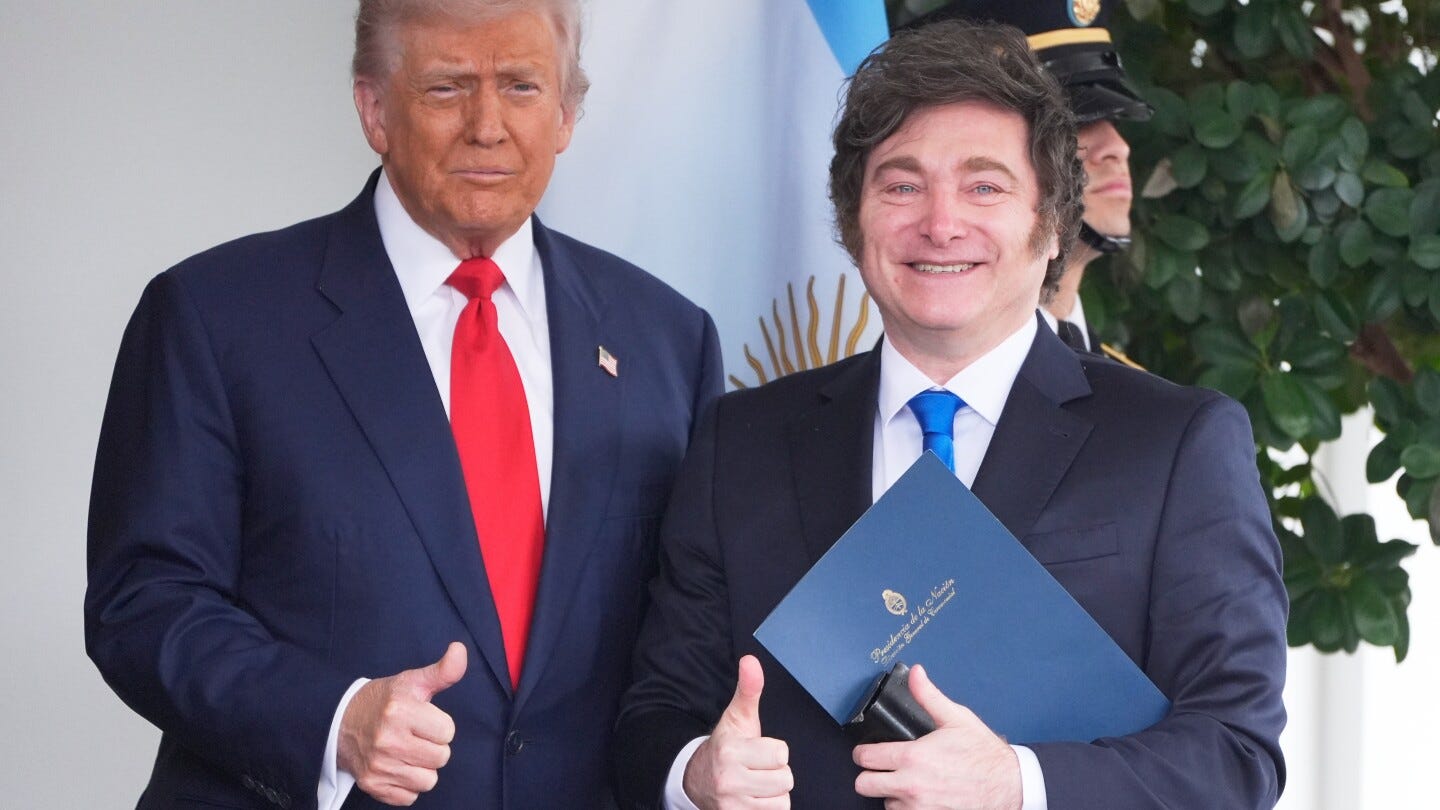

The U.S. just bailed out Argentina, treasury secretary confirms