


🧩 Project Snowstorm | The Bronner Abduction
A Truth Engine™ narrative for education and calm.
🟤 Project Snowstorm | Truth Engine™ Reference Sheet
🟤 I. Ground | Disclaimer & Context
Educational, not legal advice. Names and events are fictional but built on documented U.S. immigration-enforcement law.
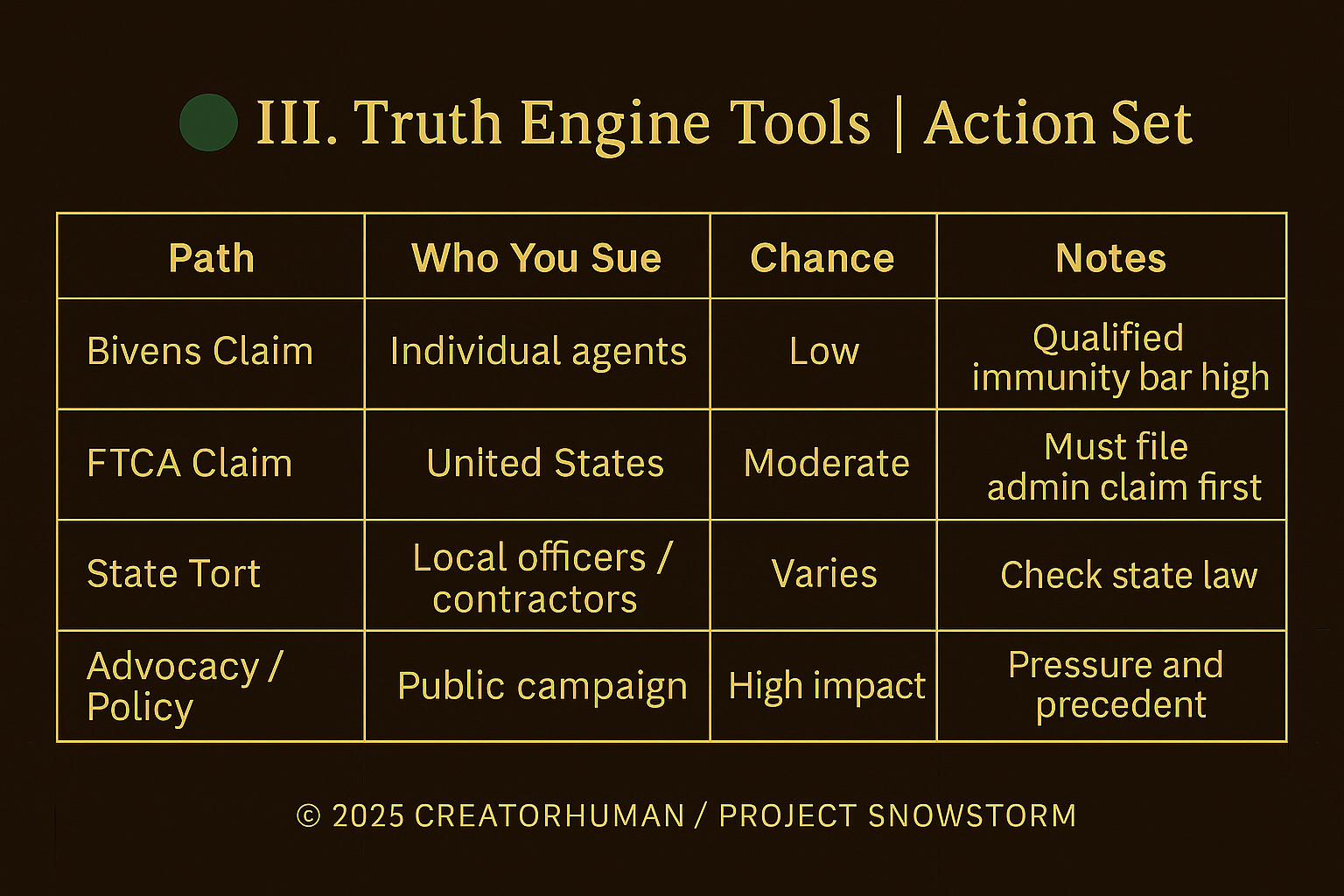
In 1971, Bivens v. Six Unknown Named Agents established that citizens may sue federal officers for violating the Fourth Amendment.
Courts have since narrowed that path: “qualified immunity” protects officers unless they breach a clearly established right.
For ICE agents, that window is small — but it exists.
Under the Federal Tort Claims Act (FTCA), victims may also seek damages from the United States after filing an administrative claim.
ICE Policy 11005.4 (2025) promises a victim-centered approach for survivors of crime, though practice varies.
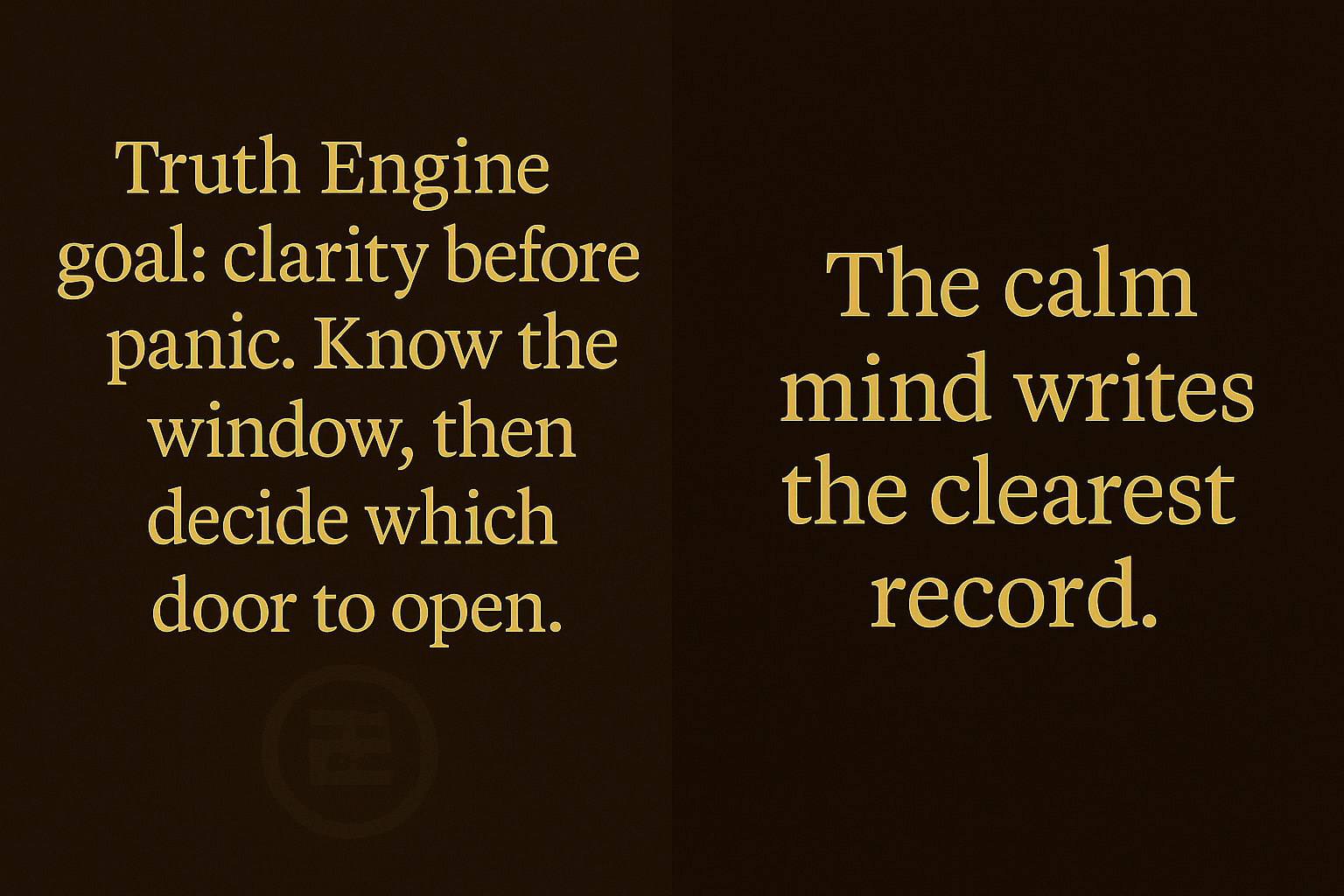
Truth Engine goal: clarity before panic.
Know the window, then decide which door to open.
🟤 Project Snowstorm | Truth Engine™ Reference Sheet
🟡 II. The Bronner Abduction | Fictional Core
A winter storm cut power across a Boise neighborhood.
In the dark, ICE agents entered Unit 3B, believing it housed a fugitive.
Inside was Elena Bronner, a lawful permanent resident and single mother.
Her 10-year-old filmed through cracked blinds as flashlights swept her kitchen.
Fact Cards
1️⃣ A federal agent may not enter a home without a judicial warrant signed by a judge.
2️⃣ Administrative ICE warrants (I-200 / I-205) do not authorize forced entry.
3️⃣ Victims of mistaken raids can file administrative claims and civil actions once safe and documented.
By morning, the livestream reached local advocates. Elena was released within 24 hours.
Her neighbors asked: Can she sue the agents?
The legal window is narrow — frost-rimmed — but open a crack.
To reach it, she must prove a clearly established constitutional violation and survive qualified immunity.
Few have. Some did.
🟡 Project Snowstorm | The Bronner Abduction Ledger
🟢 III. Truth Engine Tools | Action Set
Step 1 – Preserve Evidence
• Names / badges / vehicle IDs
• Photos + timestamps
• Witness statements signed or recorded
• Medical records if injured
• Copy any ICE forms served
Step 2 – Document with AI Assist
Prompt: “Draft a FOIA request for all records concerning my ICE detention on [date] in [city]. Include my name and birth date.”
Review, print, and sign before sending.
Step 3 – Evaluate Paths
Step 4 – File Complaints
• ICE Office of Professional Responsibility (OPR)
• DHS Office of Inspector General (OIG)
• Local civil-rights organizations / pro bono law clinics
Step 5 – Keep a Calm Record
Write a timeline within 48 hours. Facts only. No adjectives.
🟡 Project Snowstorm | The Bronner Abduction Ledger
🔵 IV. Stabilize | Reflect & Navigate Forward
Elena’s story ends with a folder on her kitchen table — receipts, names, dates.
She knows the process is long, but the record is hers.
The calm mind writes the clearest record.
AI is a tool for clarity, not anger. It can draft letters, organize files, generate checklists. It cannot replace counsel.
Truth Engine™ teaches pattern recognition: when systems repeat, the record becomes the seed of reform.
End note: Storms pass. Documentation stays. Each verified fact anchors the next claim, the next law, the next calm.
🟡 Project Snowstorm | The Bronner Abduction Ledger
